The Phantom of the Opera: what really happened here
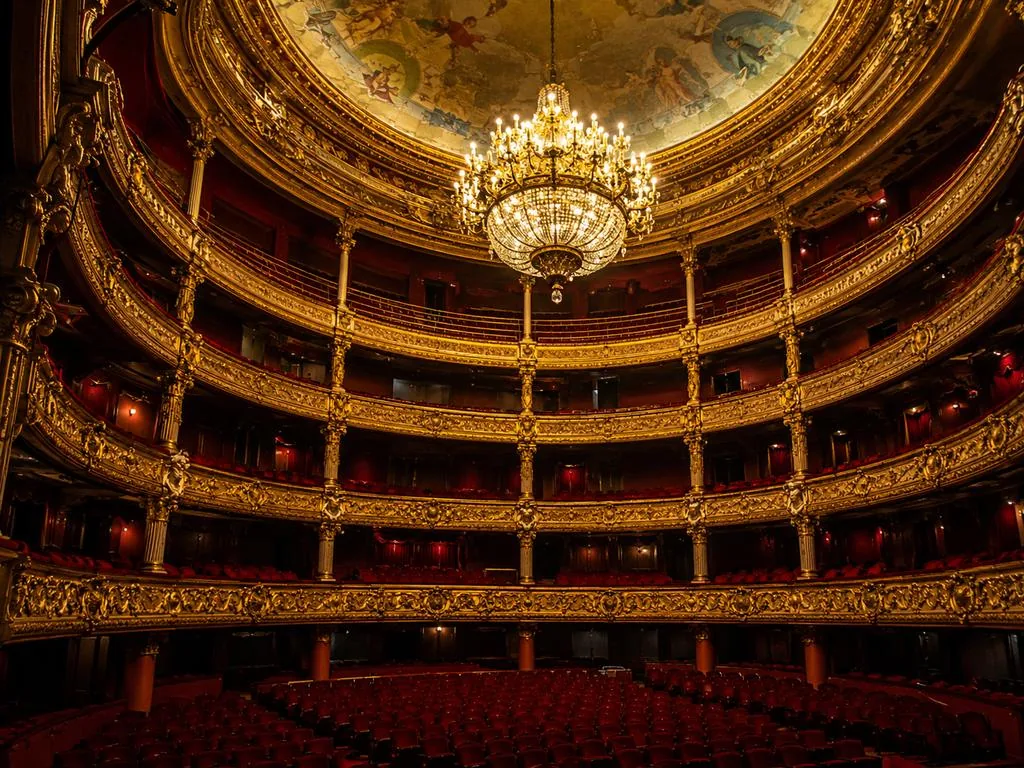
The night the ceiling gave way
The bronze-and-crystal chandelier over the auditorium weighs about seven tonnes and hangs from a system of counterweights. On that May evening in 1896 one of them tore free and came through the ceiling into the seats below. One person died. The chandelier itself stayed where it was, and has every night since — a distinction the musical’s falling-chandelier scene has cheerfully erased for millions of people. When ushers get asked “is this the one that fell”, and we do, that is the answer: a counterweight, once, and that was horror enough.
What Leroux did with it
Leroux was a journalist before he was a novelist, and he built his ghost from real planks: the 1896 accident, the water the builders fought under the foundations — which survives as a sealed cistern, not the lake of the novel; the debunk is on the underground lake page — and a private box close to the stage. The serial ran in 1909–10, and the rest is adaptation upon adaptation. The building’s actual construction saga, war and Commune included, is on the history page.
Box 5, and the plaque that fools people
Box 5 is a real box in the horseshoe, and somewhere along the way it acquired a plaque reserving it for the ghost. Visitors photograph it as proof the way tourists photograph a mermaid statue as biology. It is theatre doing what theatre does — and it sits in the auditorium, which rehearsals close without notice, so whether you see it is never guaranteed. The rest of the route holds regardless: what to see inside.
Hearing the story told properly
Two products on this site tell Phantom stories, and they are different animals. The dramatized guided visit — €40, entry included, 4.7 across 134 reviews — goes inside and tells the house’s own version on the marble itself; my review covers it. The theatre district walking tour below — €59 — never enters the Palais Garnier: it is exterior storytelling through the surrounding streets, Phantom and Les Misérables lore included, rated 5.0 from just five reviews, which is too few to lean on and I say so plainly in the walking tour review.
If you only care about the Phantom, book the dramatized visit rather than the walk — the story lives indoors, and so does Box 5.
Frequently asked questions
Did the chandelier really fall at the Palais Garnier?
Not the chandelier itself. On 20 May 1896, during the opera Hellé, one of its counterweights broke loose and fell through the ceiling, killing one person. The full chandelier has never fallen — the room it hangs in is on what to see inside.
Is the Phantom of the Opera based on a true story?
It is fiction built from real materials: the 1896 counterweight accident, the groundwater under the foundations and a real Box 5, all folded in by Gaston Leroux in 1909–10. The water half of the legend is untangled on the underground lake page.
Can I see Box 5?
When the auditorium is open, yes — but rehearsals close it frequently and without notice, and no ticket guarantees the room. The plaque on the box is a modern wink, not evidence — why the auditorium is never promised.
Does the Phantom walking tour go inside the opera house?
No. It is a theatre-district walking tour — exterior storytelling around the Garnier and the surrounding streets, with five reviews to its name so far. For the inside version, the dramatized visit includes entry — the review.